

Hellenic Space Dawn
About
The Hellenic Space Dawn mission marks a landmark milestone for Greece’s space ecosystem.
Part of the Greek National SmallSat Programme, funded by the European Recovery and Resilience Facility (RRF / Greece 2.0) and managed by the European Space Agency (ESA) on behalf of the Hellenic Ministry of Digital Governance.
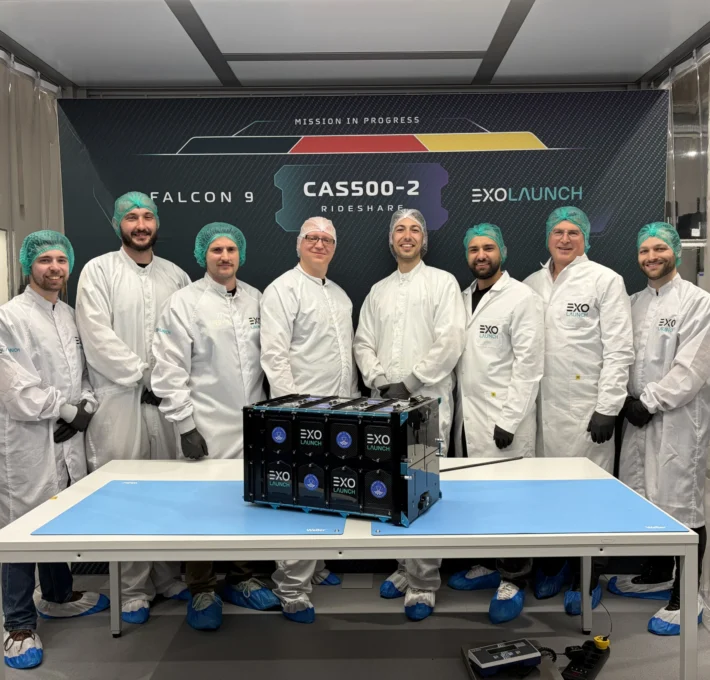
The mission features two 8U CubeSats, HELIOS and SELENE, representing the first end-to-end satellite development and operation led entirely by Greek entities, proving that domestic expertise can manage the full spacecraft lifecycle.
The Mission
The HSD mission is designed to validate Greek space technologies in-orbit while providing high-performance Earth Observation data.
Beyond traditional imaging, the satellites are equipped with Onboard/Edge AI processing to enable rapid image analysis for ship detection, flood monitoring, and urban change mapping with a high revisit rate per day. Simultaneously, the mission pushes the boundaries of connectivity by conducting laser optical communication experiments, advancing Greece’s role in emerging secure, high-speed data transmission technologies.


Overview
Mission Scale

-
Satellites: 2x 8U CubeSats (HELIOS & SELENE)
-
Development Timeline: 3 Years of Development.
-
Consortium Members: 8 Greek Entities (5 SMEs + 3 Academic Institutions)
-
International Suppliers: 10+ Global Space Partners & Suppliers
Objectives & Applications

-
Optical & RF Communications: Testing high-speed laser links for Satellite-to-Ground downlinks and high-speed RF Inter-Satellite Link (ISL) communication.
-
On-Board Edge Processing: Validating next-generation onboard Edge computing for real-time image compression, encryption, and data analysis directly on the satellite.
-
Earth Observation Applications: High-resolution imagery for maritime surveillance and ship detection, coastal and landslide monitoring, agriculture, forestry, light pollution assessment, and urban land-use monitoring
Payloads Integration

-
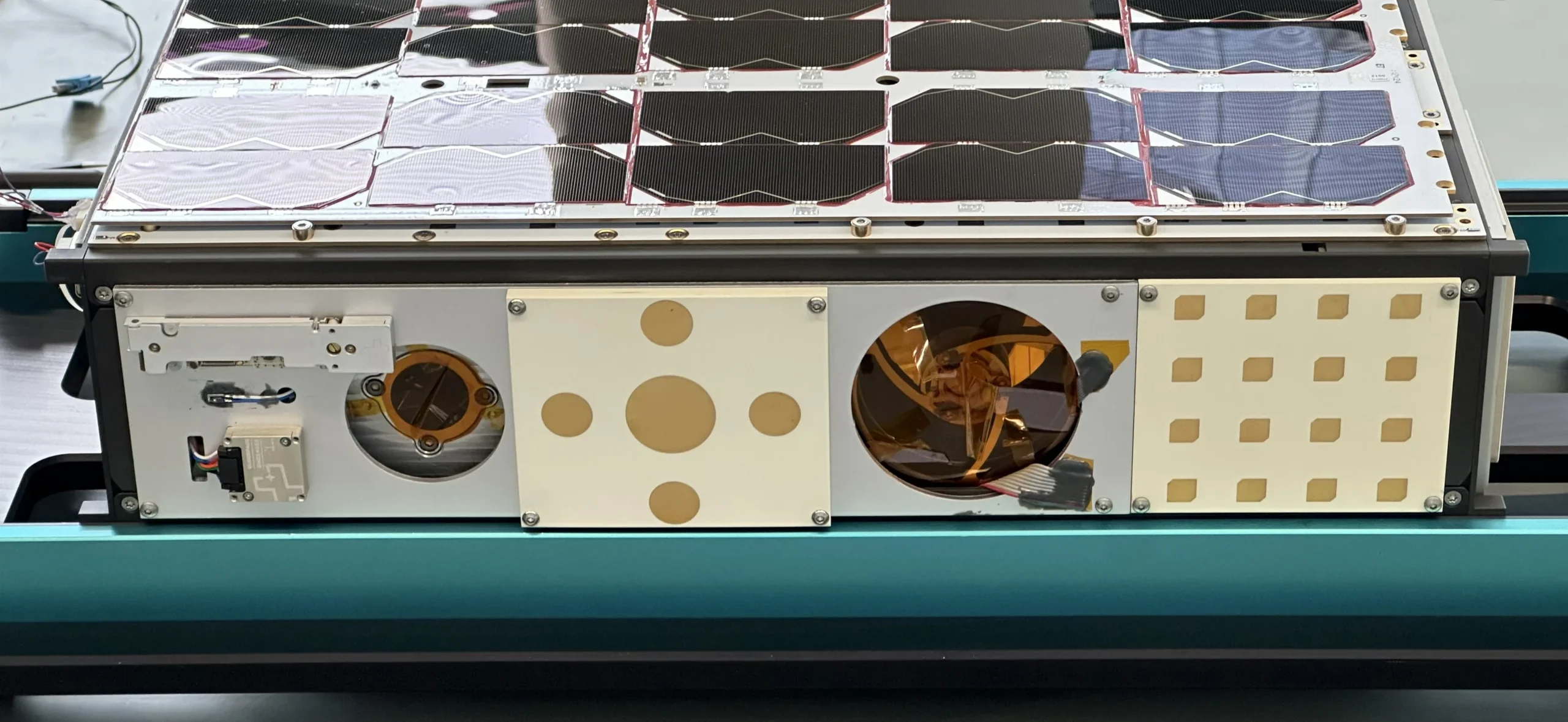
Earth Observation: Multispectral/RGB Camera (~15 m GSD, 30 km swath).
-
Inter-Satellite Link: RF ISL Transceiver (2200 MHz at 32 dBm Tx, Rx 2025–2110 MHz).
-
Edge Computing: CPPN onboard edge processor for high-speed image processing and encryption/decryption.
-
Scientific Unit: HAMSL Unit (radiation-hardened analog-mixed-signal block library).
Our Role
As the Prime Contractor, EMTECH manages the entire scope of the HSD mission.
From Project and Quality Assurance Management to Mission Analysis and the development of the Ground Segment. Beyond delivering hardware, we are fostering a national ecosystem by leading a consortium of five Greek SMEs and three academic institutions. Through this leadership, we have advanced Greece’s simulation, control, and AI capabilities, positioning the country as a credible European partner in next-generation CubeSat missions and advanced optical communication technologies.







Mission Operations & Launch Journey
Launch
-
Integration
Satellite loading into orbital dispensers.
-
Liftoff
Successful launch and dispatchment into orbit.
-
In-Orbit Deployment
Separation and orbit insertion in Low Earth Orbit (LEO).
Operations
-
Telemetry Monitoring & Visualization
Real-time telemetry processing and graphical display.
-
Command & Control Operations
Command uplink and verification systems.
-
Fault Detection & Alerting
Automated anomaly detection and alert management.
-
Lifecycle Mission Management
Management of full mission phases from LEOP (Launch and Early Orbit Phase) through routine operations to decommissioning.
Outcomes
-
Platform Commissioning
Verification of subsystem health, successful transition to full operational mode, and overall platform readiness.
-
Attitude Control Verification
Gyro torque analysis, verification of stable pointing control authority, and fine-pointing stability.
-
Comms Commissioning
Full verification of all gains/losses across the RF chain and establishment of transmission margins for reliable operational links.
Validation Chain

Mission Simulation
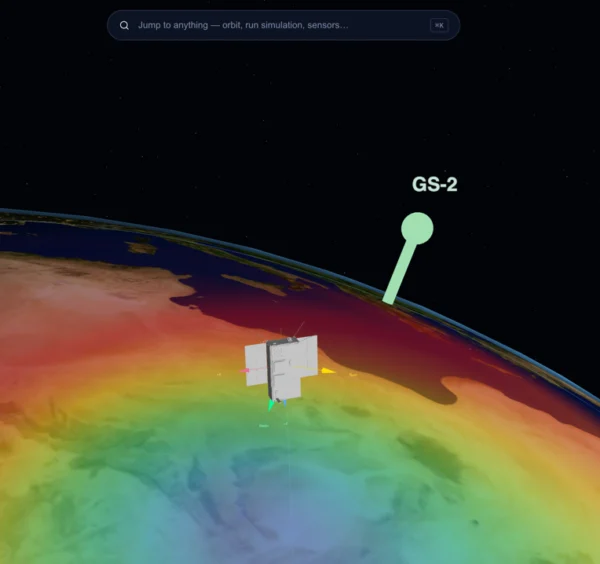
By enabling seamless model reuse—from the Functional Engineering Simulator (FES) to the Software Validation Facility (SVF) and the Operational Simulator (OPSIM)—we have created an integrated environment that supported the entire development lifecycle.
ODES Suite
ADCS and Magnetic Validation
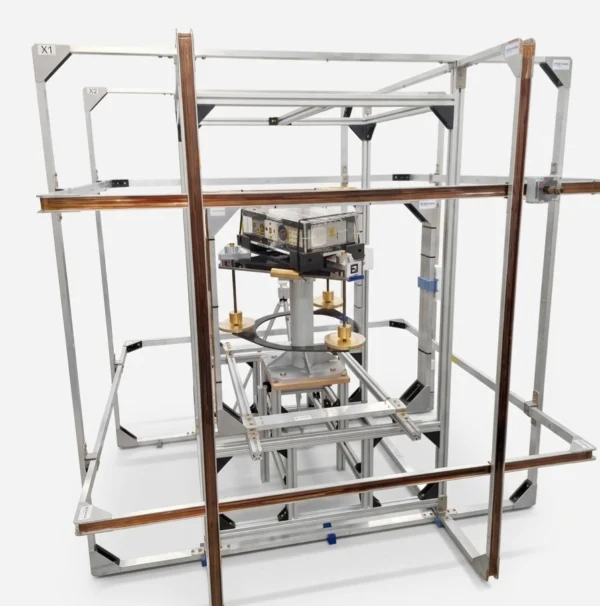
EMTECH built a tailor Validation Facility, EOS, to accurately replicate real-world space conditions for orbital magnetic fields, microgravity simulation, and PERM/DEPERM magnetic cleanliness testing for sub-degree satellite fine-pointing.
EOS Facility
End-to-End Optical Link Simulation
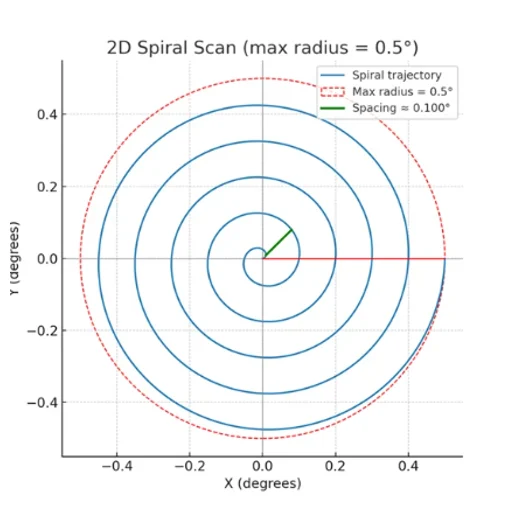
EMTECH’s high-fidelity E2E Optical Simulator enables early optimization of pointing algorithms, exhaustive link budget analysis, and accurate pass feasibility validation before launch.

The Impact
Hellenic Space Dawn is a strategic step that matures the Greek space ecosystem.
By managing the full mission lifecycle—from initial design and high-fidelity simulation to launch and in-orbit operations—EMTECH has established a proven blueprint for future small-satellite constellations. This mission confirms that through the right synergy of engineering rigor and New Space agility, we deliver reliable, end-to-end solutions that meet both national requirements and international standards.


